Now what?
You have carbon totals, nature hotspots, a footprint across the assortment. What you do not have is a next move. As Louise Amand of the Capitals Coalition puts it: "companies get stuck asking, now what, and how much can I rely on this?"
Act
The Workbench is where your footprint stops being a file and starts steering the organisation.
Trusted by sustainability teams










You have carbon totals, nature hotspots, a footprint across the assortment. What you do not have is a next move. As Louise Amand of the Capitals Coalition puts it: "companies get stuck asking, now what, and how much can I rely on this?"
A carbon total does not help a buyer switch cotton suppliers. A risk score does not land in a board meeting without a story. So the assessment you spent a quarter on stays inside the one team that can read it.
Buying happens in buying meetings. Sourcing is set by procurement. By the time the footprint arrives at year-end, the decisions it should have shaped are already made.
The Workbench turns your footprint into a working tool for the whole organisation, from the buying team to the board.
Part data analyst, part sparring partner, part communication designer. When a buying decision is coming, it models the impact. It builds the presentation the board needs, and the context is ready when someone new joins.
One retailer covers 40,000+ products across food, fashion, and household goods with a two-person team. They run a single nature assessment through the Workbench and it becomes buying conversations, supplier negotiations, and a set of public commitments.
It runs on the footprint data from Measure and feeds straight into Report. Measure, Act, Report.
Custom dashboards
Most sustainability data does not land. A PDF sent to procurement, a table appended to a board update, numbers with no story around them.
Data lands when the receiver reads a story. One click turns a baseline into a view shaped for its reader: a buying team sees the product categories driving impact, a supply chain director sees material risk, the board sees the strategic picture and the decisions it leads to. Same measurement, different framing.
Sustainability intelligence
A chart cannot answer a question. A sustainability professional asks why a category scores badly and what would change it.
Spirefly's intelligence layer is built around that gap. It draws on your targets, your data, and your frameworks, so the answers are about your company from the first question.
Where are our biggest Scope 3 emissions, and what would cut them fastest?

Purchased goods and services account for 71% of your Scope 3 footprint, concentrated in a handful of high-volume suppliers. Engaging your top 10 suppliers on renewable electricity and switching two high-emission materials to lower-carbon alternatives is the fastest lever, cutting the total by an estimated 22% by 2030.
Upload your report and describe your goals. It carries your targets, initiatives, and constraints into every conversation, and gets proactive about what changed.
Behind the assistant is a curated base of SBTN, TNFD, GHG Protocol, CSRD, and EUDR. Answers come from real sources you can cite to an auditor.
It runs on your own numbers: your products, your suppliers, and the volumes you actually buy. Specific inputs give you specific, defensible analysis.
For a hotspot analysis, a CSRD chapter, or a transition plan, it uses expert templates that structure the work and define what done looks like.
Scenario planning
The assessment tells you where you are. Scenario planning tells you where you could go, and what it takes to get there.
Before an order goes out, model it. Shift 30% of cotton to certified organic, switch a packaging supplier, scale recycled materials across a line. Scenarios run on your actual purchase volumes and return every impact dimension at once: carbon, water, pollution, land, biodiversity, and materials, all from the same data.
Customer proof
“At some point you can keep talking about water pollution, but then, how does that work? I had quite a lot of manure scoring high. So I go straight to the concrete: regenerative farming, what is that, what would the impact be? It's really nice that you can just directly consult about it.”
Fuusje Schlette
HEMA
“In my mind, what I would like best is a dashboard view. I click some things, I see my top five products with the highest impacts. And then side by side with a chat screen, I start creating that strategy.”
Jorrit
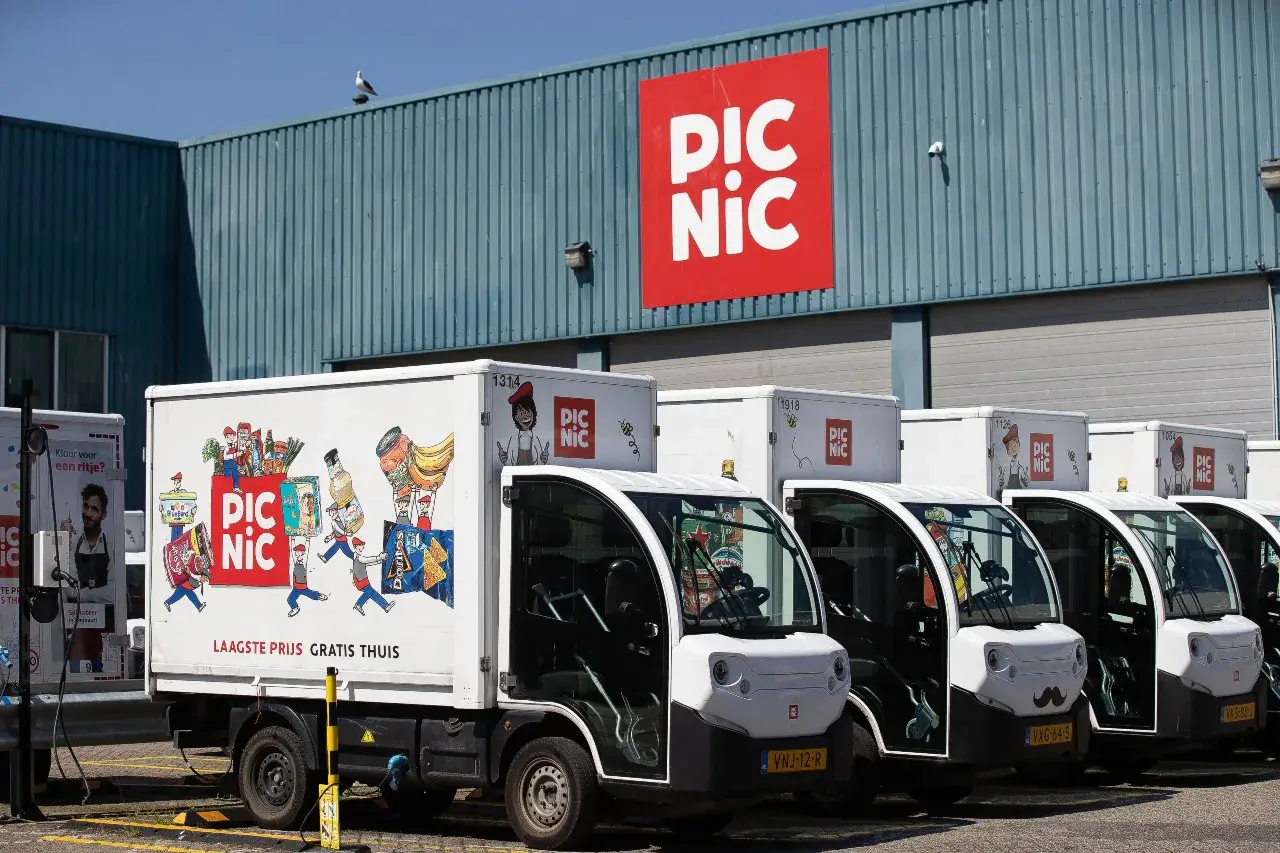
Picnic
“I could use the results directly in my work. Unlike with general AI chatbots, I really felt that I could trust the data and information that was provided, and that it provided spot-on suggestions.”
Miranda Pierson
van Rees
Book a demo and we'll walk you through dashboards, scenarios, and answers in the Workbench.
Sustainability management software turns a company's environmental footprint into decisions the whole organisation can act on. Spirefly is sustainability management software built around a Workbench: it takes your measured carbon and nature data and helps you build dashboards, answer questions from your own data, and model scenarios before you commit, so sustainability work reaches buyers, procurement, and the board across the whole organisation.
Yes. Every answer the Spirefly Workbench gives traces back to a source you can see: your own data, a named regulatory framework, or a curated methodology base covering SBTN, TNFD, the GHG Protocol, CSRD, and EUDR. It does not pattern-match a generic reply, so when it returns a number or a recommendation you can check exactly where it came from, which is what you need when you defend it to an auditor.
Yes, and sharing sustainability data across the business is the point of the Spirefly Workbench. You design a dashboard for a specific audience, so a buying team sees different metrics than a CFO, and share it directly. An interactive version is in build, where a colleague opens a shared dashboard and asks the agent follow-up questions in their own session, without editing the underlying data.
Yes, that is exactly what it is for. Most strategic sustainability work happens after the measurement: translating findings into supplier conversations, building a board update, or modelling a sourcing decision before it is made. Teams on biannual measurement cycles use the Spirefly Workbench all year, and continuity is a common reason, since switching tools can leave you with only screenshots of an old carbon dashboard.
No, and the two work well together. Your consultant stops building slides around your data and spends that time on deep strategic work, which is what you actually pay them for. The Spirefly Workbench handles the layer between analysis and communication: turning findings into dashboards, narratives, and internal documents. That frees expert time for the judgement calls that need a human.
Onboarding Spirefly takes a single session. You upload your sustainability report, or describe your goals and current initiatives, the system builds your company profile, and your first working session can start the same day. The Workbench gets more useful as it accumulates data across measurement cycles, but you do not wait for that to get started.
Yes. With the Spirefly Workbench you build a dashboard for a buyer or procurement team that shows what they need, framed for them and drawn from your existing footprint data. A narrative built on your actual data is faster to produce than a static PDF. Sharing features for external stakeholders are in active development.
Yes. Benchmarking is part of the Spirefly Workbench's intelligence layer. It pulls qualitative context from peer sustainability reports to inform policy design, plus quantitative benchmarks where sector data exists. One retailer used this to shape its own nature policy, reviewing how H&M, Inditex, and others structured their disclosures before deciding on an approach.
Send it to our team and we'll reply by email.