
How to incorporate nature and biodiversity into your materials strategy
Pieter van Exter · 13 Dec 2023
Explore the importance of including nature and biodiversity in your thinking. Follow these practical steps to start building a holistic environmental materials strategy.

Including nature and biodiversity is imperative for a sustainable materials strategy
Whether you operate in retail, food and beverage, or textile and fashion, the majority of the environmental footprint in most sectors is not within a company’s own operations. Instead, it lies in the supply chain, where nature-related impacts are embedded in the materials used — cotton spun into fabric, soy to feed cattle, or wood for construction materials. Developing an effective and robust materials strategy is essential for companies to achieve their climate goals.
Proactively considering nature-related impacts and risks during the early stages of strategy development yields many benefits, preparing your company for the challenges of the upcoming decade of nature. In this article, we will dive deeper into the importance of including nature in your thinking and provide seven practical steps to start building a holistic environmental materials strategy.
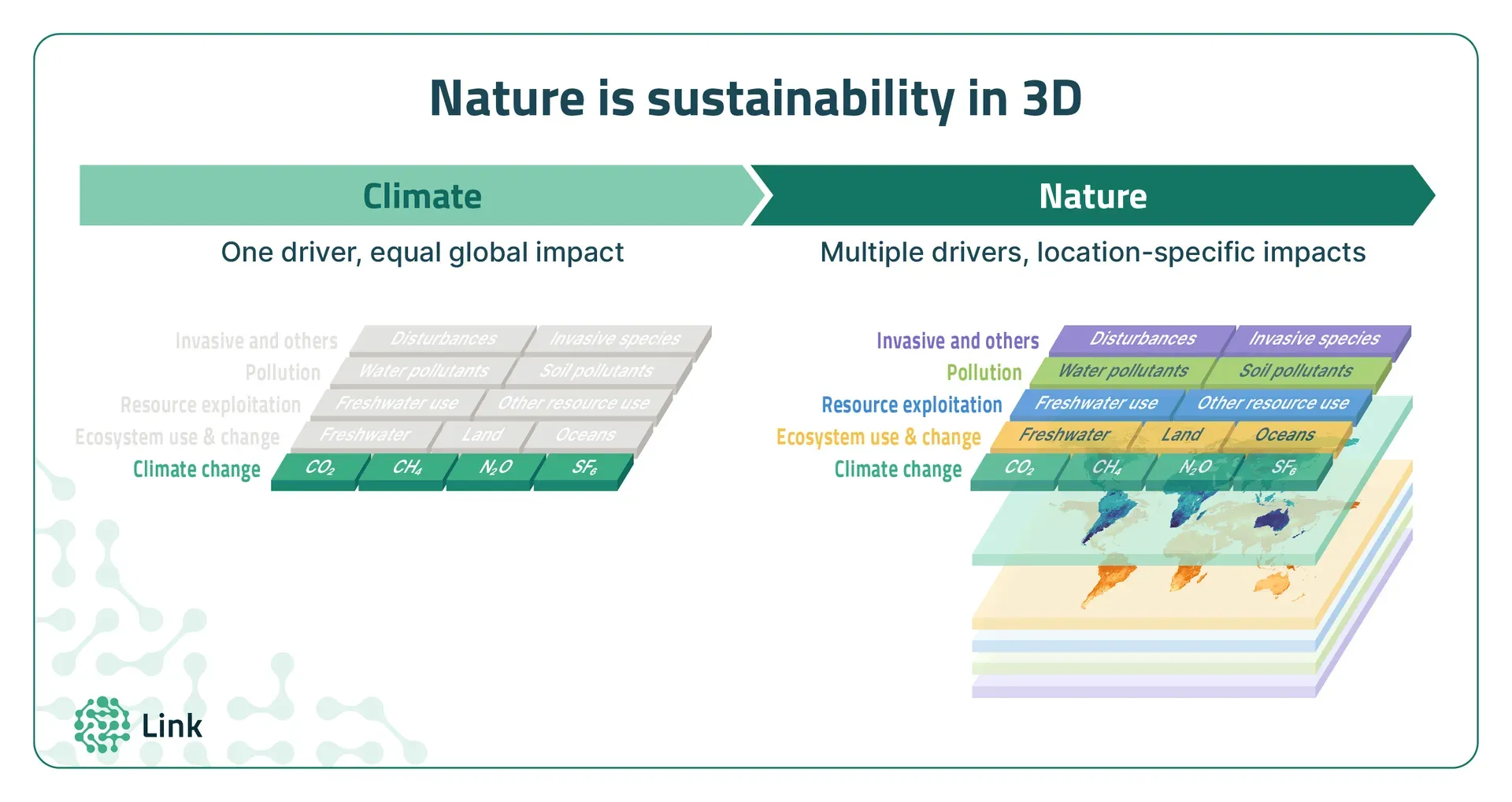
Nature is sustainability in 3D and requires contextual understanding
The first step is mapping out the ways your materials negatively impact nature and biodiversity. The Intergovernmental Science-Policy Platform on Biodiversity and Ecosystem Services (IPBES) identifies five direct drivers through which a company’s activities can exert pressure on nature and biodiversity; climate change is just one of them. Strictly focusing on carbon is a one-dimensional perspective; other drivers of biodiversity loss to consider are land and water use change, pollution, direct exploitation of natural resources, and invasive species.
Yet expanding environmental indicators beyond carbon is insufficient. For nature and biodiversity, it is imperative to understand the local conditions where pressures are released. Does your company use water from a region with a dry or humid climate? Is it operating in an area of high or low biodiversity importance? Answers to such questions provide a nuanced understanding of your company’s relationship with nature, enabling a more comprehensive and sustainable approach to environmental impact assessment.
Overlooking nature in your materials strategy may backfire
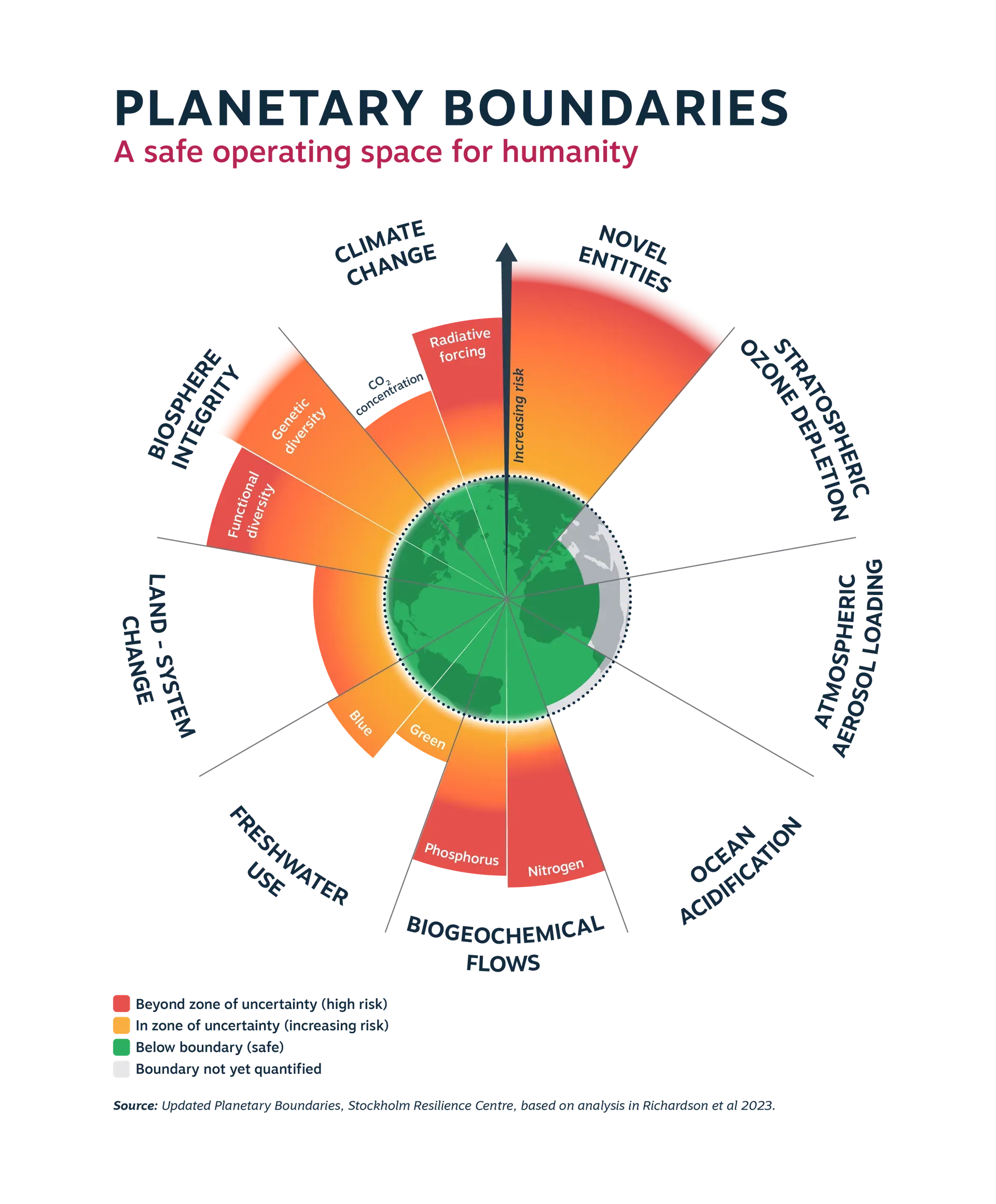
The loss of global wildlife and deteriorating nature is worse than we think
While climate change remains the dominant sustainability issue, policymakers, investors, and scientists believe that the looming nature and biodiversity crisis may have an even greater impact on our global economy and human well-being. If you look at the planetary boundaries, we’ve exceeded the safe limits for biodiversity, nitrogen, and phosphorus more than we have for climate change — a clear signal that nature and biodiversity must be part of every sustainability strategy.
Low-carbon biobased materials come with higher nature impacts and risks
When transitioning to biobased materials for a lower carbon footprint, companies need to be cautious. While these materials can help reduce carbon emissions, it’s important to recognize that they may have other impacts. The processes involved in cultivating and extracting biobased materials, like those from crops or organic sources, can lead to habitat disruption, deforestation, and biodiversity loss. Therefore, it’s crucial to be thoughtful when shifting to biobased materials, and avoid burden shifting by considering the wider ecological effects to ensure sustainable and well-informed material selection decisions. Alternatively, you can also identify synergies by improving both your climate and your nature footprint.
Regulators and investors are increasingly focused on nature-related disclosures
With upcoming regulations and new voluntary frameworks on nature and biodiversity such as CSRD, SBTN, and TNFD, it is advisable to include a nature focus early on. By doing so, businesses can proactively align with forthcoming requirements, fostering a more sustainable and compliant approach. This ensures companies are well-prepared for evolving regulatory landscapes, ultimately contributing to a more responsible and resilient business model.

7 steps to include nature and biodiversity in your company’s materials strategy
- Find or estimate the location of material sourcing Identify where in the supply chain your activities occur. (If you don’t know where your commodities are being sourced, it is recommended to calculate the estimated sourcing locations to get a proper understanding of the local state of nature in step 3.)
- Perform an impact assessment for nature-related indicators Calculate the impacts of the key indicators that contribute to degrading nature and biodiversity loss, including land use (changes), resource use, pollution, etc.
- Assess the local state of nature Assess the local condition and the state of nature for the (estimated) locations where you are sourcing from. You can use different geospatial layers for different indicators that are associated with the pressures (e.g. water stress is connected to water use) and different aspects of biodiversity.
- Review relevant certifications If you are sourcing materials that are certified, it’s important to review the standards to confirm whether they assure environmentally beneficial practices.
- Identify priorities and formulate a strategy Analyze the results and prioritize across nature-related impacts and risks. If possible, also include business forecasts so that you can include your most significant materials in the future.
- Engage with suppliers Find out which suppliers are associated with these materials and engage with them to validate your assumptions. Then set up an action plan to implement improvements throughout your supply chain.
- Track progress Monitor, track, and evaluate the effects and results of your company’s efforts to measure the progress toward your objectives. Clear and transparent reporting on the measures taken and their results is crucial for both internal and external communication
Steps 2 and 3 are often where sustainability teams get stuck — gathering the right geospatial data and running the impact calculations is time-intensive. Spirefly’s nature assessment tool automates both, so you can move from sourcing data to actionable priorities without months of manual work.



Want to see how Spirefly works?
Book a demo for a walkthrough of the product.